Welcome to the world of small business insurance, where peace of mind meets business savvy. If you’re a small business owner, navigating the maze of insurance options can seem daunting. But fear not! In this guide, we’re diving into the essentials of commercial insurance that every small business needs to safeguard against the unexpected.
Understanding the right insurance policies can mean the difference between thriving in a crisis or struggling to stay afloat. So buckle up as we explore the top three commercial insurance types that can protect your business from potential downfalls, and ensure you’re prepared for whatever comes your way.
Introduction to Small Business Insurance

Did you know that 40% of small businesses never reopen after a disaster? That’s why having the right insurance is crucial.
Insurance isn’t just a safety net. It’s a lifeline. It protects your business from unexpected events that could cripple operations. Let’s dig into the essentials every small business owner needs to know.
Key Types of Insurance for Small Businesses
Running a business without insurance is like driving without a seatbelt—risky! First, there’s General Liability Insurance. It covers accidents and injuries that happen on your premises. Then, there’s Property Insurance to protect your physical assets.
Don’t forget about Professional Liability Insurance if you provide services. It’s your shield against negligence claims. And if you have employees, Workers’ Compensation Insurance is a must.
Risks Small Businesses Face Without Insurance
Imagine a customer slipping in your store and taking you to court. Or a fire destroying your inventory. Without insurance, you’d pay out of pocket. That’s money most businesses can’t afford to lose.
Here’s the deal: Uninsured businesses face financial ruin when disaster strikes. They risk losing hard-earned assets and even the business itself. Can you really afford that kind of risk?
Pro Tip: Regularly review your insurance policies to ensure they match your growing business needs.
Types of Commercial Insurance for Small Businesses
Did you know that 40% of small businesses never reopen after a disaster? The right insurance can be the lifeline your business needs.
Understanding the different types of commercial insurance is crucial for safeguarding your business. From protecting your premises to covering employee injuries, each policy serves a unique purpose.
Common Commercial Insurance Types
Let’s break down the essential insurance types that every small business should consider:
- General Liability Insurance: Covers third-party claims for bodily injury and property damage.
- Property Insurance: Protects your physical assets from damage or theft.
- Workers’ Compensation Insurance: Provides coverage for employee injuries and illnesses on the job.
- Professional Liability Insurance: Also known as Errors and Omissions, it covers lawsuits related to professional mistakes.
- Business Interruption Insurance: Compensates for lost income due to disasters that disrupt operations.
Insurance Feature Comparison
Here is the deal: Not all insurance policies are created equal. Choosing the right one depends on your business needs.
| Insurance Type | Coverage | Best For |
|---|---|---|
| General Liability | Third-party bodily injury, property damage | All businesses |
| Property Insurance | Physical assets, theft, damage | Physical storefronts and offices |
| Workers’ Compensation | Employee injuries, medical expenses | Businesses with employees |
| Professional Liability | Negligence claims, legal defense | Service providers |
| Business Interruption | Lost income, operational expenses | Businesses in disaster-prone areas |
Pro Tip: Tailor your insurance coverage to fit the specific risks and needs of your business sector.
Benefits of Having Commercial Insurance
Did you know that nearly 40% of small businesses never reopen their doors after a disaster? That’s a stark statistic. Insurance could be the lifeline your small business needs to survive unforeseen events.
You might be wondering, “How exactly does insurance help?” Well, commercial insurance is like a sturdy safety net. It can help you mitigate financial risks by covering costs associated with accidents, lawsuits, or natural disasters. Without it, a single incident could drain your finances and force you to close up shop. Let’s dive deeper into how insurance offers protection.
Financial Risk Mitigation
Insurance acts as a crucial shield against financial turmoil. For example, if a fire damages your office, property insurance can cover the repair costs. If a customer slips and falls, liability insurance can help cover legal fees and medical expenses. In both cases, without insurance, you’re left footing the bill. That’s a hit that many small businesses simply can’t afford.
Pro Tip: Always review your insurance policy annually to ensure it matches your business’s evolving needs.
Real-life scenarios abound where commercial insurance has been a savior. Imagine a bakery that suffered a massive loss due to equipment failure. Thanks to their business interruption insurance, they were able to recoup lost income and continue paying their employees during repairs. Here is the deal: When you have insurance, you’re not just buying a policy; you’re securing the future of your business.
Selecting the Right Insurance for Your Small Business
Did you know that 40% of small businesses never reopen after a disaster? Picking the right insurance can mean the difference between recovery and ruin.
But with so many options out there, how do you choose? Here’s a streamlined approach to help you zero in on the perfect policy for your business.
Evaluating Your Insurance Needs Based on Business Type
Different businesses have different needs. A coffee shop will have different risks compared to a tech startup. The first step is to list all potential risks your business might face. Are you worried about property damage or data breaches? Identifying these risks will help you determine which coverages are essential. Don’t skip this step—it sets the foundation for everything else.
Step-by-Step Guide to Choosing the Right Insurance Policy
Here’s the deal: Selecting the right policy is a systematic process. Follow these steps:
- Identify Your Risks: List the unique risks your business faces as discussed.
- Research Types of Insurance: Learn about coverages like General Liability, Professional Liability, and others that apply to your business.
- Consult with Experts: Talk to an insurance advisor to refine your needs.
- Compare Policies: Use a comparison table to evaluate policies based on coverage, price, and terms.
- Review Regularly: Your business evolves, and so should your insurance.
Assessing Insurance Providers
Not all insurance providers are created equal. To ensure you choose the best provider, assess them on these criteria:
- Financial Stability: Can they pay out when needed?
- Customer Service: Are they responsive and helpful?
- Reputation: What do other businesses say about them?
Pro Tip:
Always read the fine print. Hidden clauses can cost you big time.
Follow these steps and you’ll be well on your way to safeguarding your business against unexpected events.
Cost Considerations and Budgeting for Insurance
Did you know that almost 40% of small businesses don’t have insurance? That’s a risky move. But what really drives up the cost of insurance, and how can you budget for it effectively?
Here is the deal: Insurance premiums can vary widely depending on several factors. Understanding these can help you plan smarter and save money.
Factors Affecting Insurance Premium Costs
Insurance costs depend on multiple variables. The size of your business, the industry you’re in, and the specific risks associated with your operations play a big role. For instance, a small tech startup might pay less than a construction company due to lower risk exposure. Your location also matters; businesses in areas prone to natural disasters often face higher premiums. But here’s the kicker: your claim history can significantly impact costs. Frequent claims can spike your rates.
Budgeting for Insurance Expenses
Budgeting for insurance is crucial to avoid surprises. Start by determining the types of coverage your business needs, then get quotes from multiple insurers. Don’t forget to factor in other business costs to see what you can realistically allocate towards insurance. Use a simple percentage of your revenue as a guide to estimate insurance expenses—typically around 2%-5% for most small businesses.
Pro Tip: Bundle your policies with one insurer to unlock discounts!
Sample Budget Plan Including Insurance Costs
To give you a concrete example, here’s a basic budget plan that incorporates insurance costs. This can serve as a template for your own planning:
| Expense Category | Monthly Cost | Annual Cost |
|---|---|---|
| General Liability Insurance | $100 | $1,200 |
| Property Insurance | $150 | $1,800 |
| Workers Compensation | $200 | $2,400 |
| Total Insurance Costs | $450 | $5,400 |
Legal and Regulatory Considerations
Did you know that NOT having the right insurance could cost your small business thousands in fines and penalties? I’m about to show you how you can avoid that.
Understanding the legal and regulatory landscape for small business insurance is crucial. Different regions have specific requirements, and missing one can result in costly repercussions. Let’s dive into what you need to know to keep your business safe and compliant.
Legal Requirements Across Different Regions
Every region has its own set of legal requirements for small business insurance. In the U.S., for example, most states require workers’ compensation insurance if you have employees. But that’s not all. In some areas, you might also need general liability insurance or even professional liability insurance. Here’s the deal: you absolutely need to research what your specific region demands. Ignorance isn’t bliss when it comes to legal compliance.
Regulatory Bodies Overseeing Small Business Insurance
Wondering who’s making sure you follow the rules? Each country, and often each state, has regulatory bodies that oversee small business insurance. In the U.S., the National Association of Insurance Commissioners (NAIC) plays a significant role. Meanwhile, the Financial Conduct Authority (FCA) regulates insurance in the UK. Get familiar with these entities because they’re the ones setting the standards you’ll need to meet.
- USA: National Association of Insurance Commissioners (NAIC)
- UK: Financial Conduct Authority (FCA)
- Canada: Office of the Superintendent of Financial Institutions (OSFI)
Compliance Protects Your Business
Compliance isn’t just a box to check off. It’s your first line of defense against legal troubles. By staying compliant with insurance regulations, you’re protecting your business from potential lawsuits and financial penalties. Plus, compliance can often make your business more attractive to savvy customers who know that you’re playing by the rules.
Pro Tip: Regularly review your insurance policies and compliance status with an expert to stay ahead of any changes in regulations.
The bottom line? Compliance is a must—not just to avoid fines, but to keep your business future-proof.
Summary
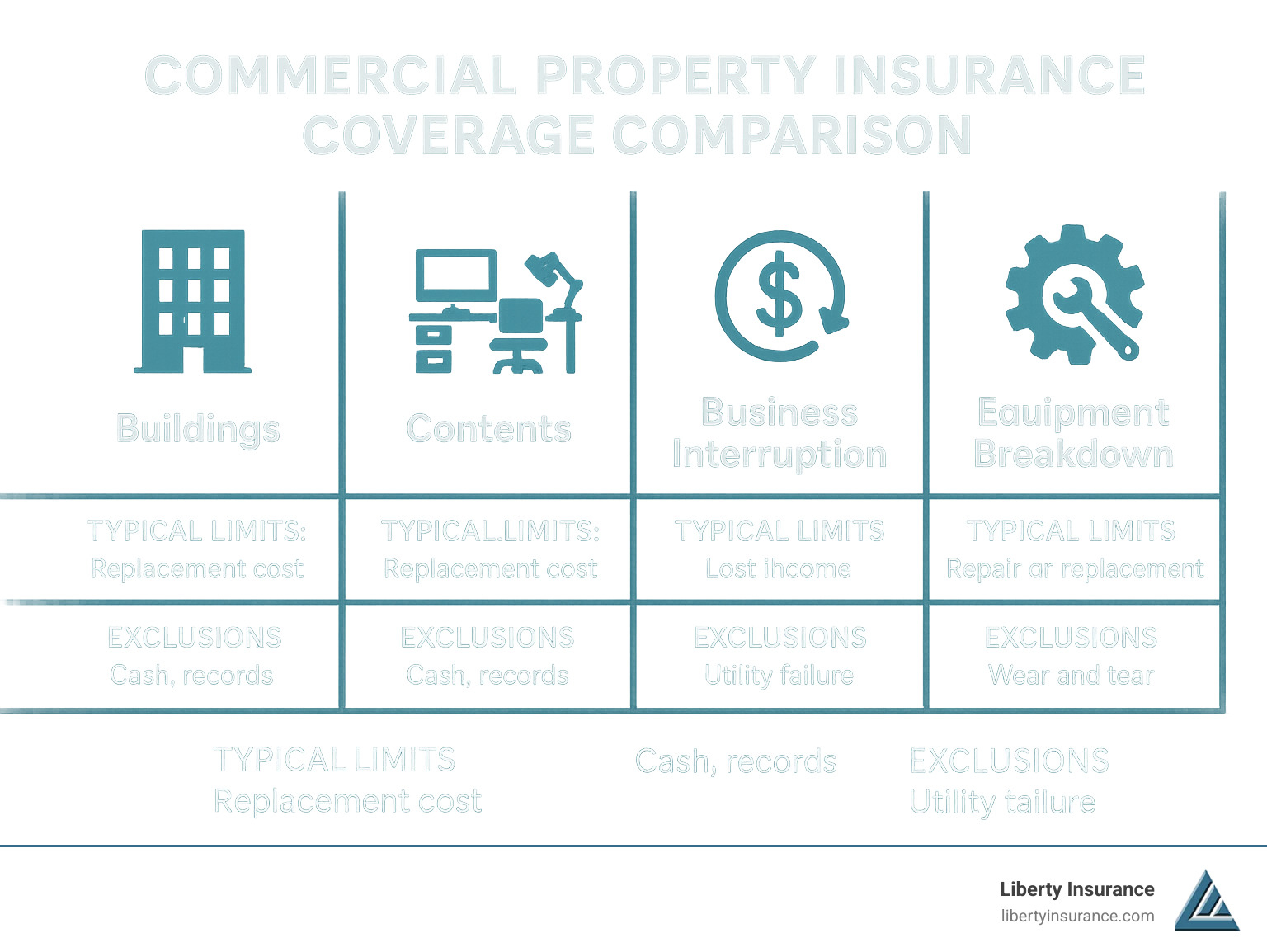
In conclusion, choosing the right insurance is a crucial step for every small business owner. By understanding the different types of policies available, you can arm your business against unforeseen threats and ensure long-term stability. Dive into these insights and make informed decisions that will safeguard your business’s future.
Frequently Asked Questions
What are the three essential types of commercial insurance for small businesses?
The three essential types are General Liability Insurance, Property Insurance, and Workers’ Compensation Insurance.
Why is General Liability Insurance important for small businesses?
It protects businesses from claims of injury, property damage, and negligence related to your business activities.
How does Property Insurance benefit a small business?
Property Insurance covers damage to your business property from events such as fire, theft, or natural disasters, ensuring you can recover quickly.
What is Workers’ Compensation Insurance?
Workers’ Compensation Insurance provides benefits to employees who get injured or become ill due to their job, protecting your business from lawsuits related to workplace injuries.
How can I evaluate which insurance is right for my business?
Consider the nature of your business, potential risks, and consult with insurance experts to tailor the right coverage for your needs.
